 Families with young children need more support and more affordable options—not fewer. Yet a new federal proposal could weaken Head Start, one of the most important sources of early care, education, and family support in communities across Georgia.
For more than 60 years, Head Start and Early Head Start have helped Georgia families access high-quality early learning alongside health, nutrition, disability, and family supports that help children thrive and parents work.

What’s Happening?
The U.S. Department of Health and Human Services (HHS) has proposed sweeping changes to the standards that guide Head Start programs.
If finalized, the proposal would significantly change the quality and comprehensiveness of Head Start services and make it harder for programs to meet the needs of Georgia’s children, families, and communities.
The proposed rule would, among other changes:
- Eliminate evidence-based teacher-child ratio and class-size requirements. This means teachers may have more children to care for, a condition that could impact children’s safety and development.
- Weaken requirements related to services and supports for children with disabilities and children experiencing homelessness.
- Prevent programs from providing services to children in languages other than English.
- Allow some Head Start programs to operate for as little as three hours per day—hours that simply do not work for many working families.
- Weaken services for pregnant women, new parents, and infants, including maternal and newborn health supports and key requirements for Early Head Start home visiting.
- Restrict programs from requiring or incentivizing higher education and credentials for staff, except in limited circumstances. This could undermine efforts to build a highly-qualified Head Start workforce.
Some efforts to streamline requirements and reduce unnecessary administrative burden could benefit Head Start programs. But streamlining should make it easier for programs to serve families—not weaken the quality and comprehensive services families depend on.
Georgia families need broader investments that make it easier to raise a family. Weakening Head Start moves us in the wrong direction.
Take Action: Submit a Public Comment
Every comment matters. HHS reviews public comments as part of the rulemaking process, and hearing from many Head Start parents, educators, providers, and community members can demonstrate how broadly these proposed changes could affect children and families.
Make your comment your own. Identical form comments may be grouped or counted together rather than treated as separate substantive comments. Even if you start with one of our templates, add a few sentences about your own experience, program, family, or community.
- Visit the Head Start proposed rule on Regulations.gov.
- Click the “Comment” button on the top, left of the page.
- Add your comment.
Copy and paste your personalized comment into the comment box. You may also have the option to upload your comment as a file. When submitting your comment, be sure to reference Docket No. ACF-2026-0595.
- Complete the required information.
Follow the prompts to identify yourself and provide any required information.
- Review and submit.
Take one last look at your comment, then click “Submit Comment.”
- Save your confirmation.
After submitting, you’ll receive a Comment Tracking Number. Save it for your records.
A quick privacy note: Comments submitted through Regulations.gov become part of the public record. Avoid including personal or confidential information that you would not want made publicly available.
Template Responses from Partners
Short on Time? Sign On to a Comment
Submitting your own personalized comment is the best way to share your experiences and perspective. If you don’t have the time or capacity to write an individual comment, you can still make your voice heard by signing on to one of these comment letters from Start Early:
For Head Start Families
Head Start parents and family members can add their names to Start Early’s family sign-on letter. Click here to sign the family letter.
For Head Start Professionals
Head Start educators, staff, leaders, and other professionals can add their names to Start Early’s professional sign-on letter. Click here to sign the professional letter.
Georgia-Specific Data
Head Start’s comprehensive approach matters across Georgia—from helping parents work to identifying children who may need early intervention services. Proposed changes to Head Start would have real implications for Georgia’s children, families, educators, and communities.
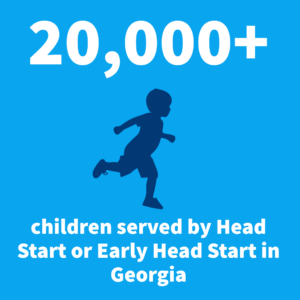
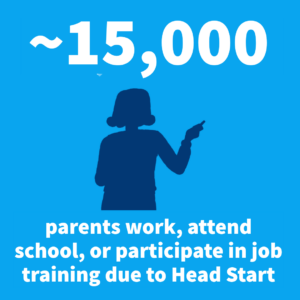
- More than 20,000 Georgia children are served by Head Start and Early Head Start at 379 sites across the state. Head Start also employs more than 6,000 Georgians and helps 14,817 parents work, attend school, or participate in job training (source).
- In rural Georgia, more than 1 in 4 child care slots are in Head Start, making the program a particularly important part of the early care and education infrastructure in rural communities (source).
- Nearly 1 in 4 Georgia children under six is a dual language learner. Proposed English-only instructional requirements could limit educators’ ability to build on children’s home languages as they learn English (source).
- Head Start plays an important role in identifying children who may need early intervention or special education services. According to Georgia’s 2025 Head Start Program Information Report (PIR), programs referred 1,350 children for evaluations to determine eligibility for services under the Individuals with Disabilities Education Act (IDEA).
- 17% of Georgia 3- and 4-year-olds with an IEP attended Head Start, underscoring the program’s role in providing inclusive early learning opportunities for children with disabilities (source).
- More than 36,000 Georgia children under age six—4.6%—experience homelessness each year (source). Head Start provides important protections intended to help families experiencing homelessness access and participate in the program.
- Georgia Head Start educators already face a substantial compensation gap. A Georgia Head Start teacher with a bachelor’s degree earns an average of $43,376, compared with $74,277 for the average Georgia public K–12 teacher (source).
- Georgia’s child care licensing standards allow substantially larger ratios than Head Start for some of the youngest children. Using 2-year-olds as an example, Early Head Start requires one teacher for every four children, while Georgia licensing allows one adult for every 10 children. Head Start’s smaller ratios are intentional: they give babies and toddlers more time with consistent educators who know them and can respond to their individual needs (source).
Other Ways to Make Your Voice Heard:

Use our action alert to easily contact your members of Congress and share how the proposed changes to Head Start could affect children, families, and communities in Georgia.

Our ready-to-use social media graphics and posts to help others understand what the proposed changes could mean for Head Start and encourage your network to take action.

Are you a Head Start parent or staff member? Share what Head Start means to you and what the proposed changes could mean for your family, program, or community.

Invite your members of Congress and their staff to visit your Head Start program, meet families and educators, and see firsthand the quality and comprehensive services that could be affected by the proposed changes. Connect with a GEEARS staff member to prepare for the visit by emailing csanders@geears.org.